What Are Brand Awareness Metrics And How To Measure Them?

Have you observed people saying, “Google it” instead of “search for it online” when they have a doubt?
If you look closely, Google isn’t the internet, and it isn’t even the only search engine. But in many minds, it has become the default word for searching.
And that’s the power of brand awareness. When the brand establishes itself in the minds of people, it reaches a level where the brand name replaces the product category.
Therefore, to establish your brand’s authority, you need to track brand awareness metrics properly. In this article, we will briefly discuss them.
Let us begin.
Table of contents
- What Are Brand Awareness Metrics?
- Why Measuring Brand Awareness Is Important
- Steps For Measuring Brand Awareness Metrics
- Tips to Improve Brand Awareness After Measurement
- Turning Brand Awareness Into Action
What Are Brand Awareness Metrics?
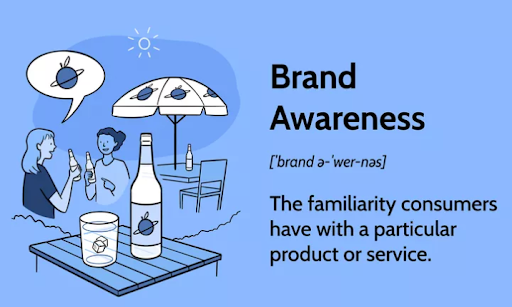
Brand awareness metrics enable you to measure the level of familiarity that the target audience has with the brand. Brand awareness is measured either by the percentage of people who are familiar with the brand or by the level of recognition that the target audience has for the brand. This allows the marketer to determine the extent to which the target audience has heard of the brand.
Consider a musician releasing a new album. Fans might be aware of the artist’s name. But the real metrics to determine the craze of a song is when listeners can identify that song after hearing just a few notes.
Similarly, brand awareness metrics range from simple quantifiable numbers to deeper, perception-based indicators that reflect how people connect with your brand.
Types of Brand Awareness Metrics
| Aspect | Measurable Data Points | Perception-Based Indicators |
|---|---|---|
| Definition | Quantitative metrics that track how often and where your brand appears or is searched for | Qualitative insights that reveal how people recognize, recall, or emotionally connect with your brand |
| What They Measure | Visibility, reach, and frequency of brand exposure | Familiarity, trust, and mental association with your brand |
| Nature of Data | Numeric, objective, and trend-driven | Subjective, opinion-based, and sentiment-driven |
| Common Examples | Branded search volume, website traffic, impressions, social mentions, share of voice | Brand recall, brand recognition, customer perception, sentiment, trust level |
| Data Collection Method | Analytics platforms, search consoles, social monitoring tools | Surveys, interviews, focus groups, recall tests |
| Speed of Insights | Faster to track and analyze in real time | Takes longer but offers a deeper understanding. AI technology can improve the speed of insights. |
| Best Used For | Measuring reach, campaign visibility, and growth over time | Understanding brand positioning and emotional impact |
| Limitations | Shows how often people see your brand, not how they feel about it | Can be influenced by bias or a limited sample size |
| Role in Strategy | Helps optimize channels, frequency, and distribution | Guides messaging, tone, and long-term brand direction |
Why Measuring Brand Awareness Is Important
Consider that there are two products. They both solve the same problem with similar pricing. Maybe the first one is better than the second one. You are aware of the second brand and not very aware of the first brand.
Which one will you choose?
Obviously, the second one! Right?
People choose brands that appear familiar, credible, or trustworthy.
Let’s understand why measuring brand awareness is important:
1. It Reveals Customer Perception
Understanding awareness helps you answer questions like:
- Do people know your brand for what you want them to know?
- Is our message clear in the market?
- Are we associated with the right problem or solution?
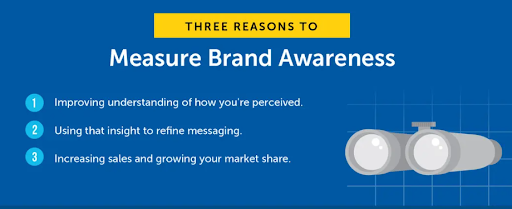
These insights help you adjust messaging, reposition your offerings, or clarify your value proposition.
2. It Informs Competitive Standing
Numbers will reveal your position relative to your competition. When your brand has an increasingly higher search volume, but it remains lower than your competitors’ search volume, you can accordingly improve your strategies.
3. It Validates Marketing Spend
Brands that measure awareness can:
- Track which channels are driving visibility
- Identify messaging that resonates best
- Shift the budget from underperforming strategies to the strategies that work
Without tracking the performance, you’re spending hundreds of dollars on marketing without knowing if your strategies are working or not.For a dropshipping business, this could mean wasting ad spend on campaigns that don’t build recognition, resulting in lower conversion rates despite competitive pricing.
Steps For Measuring Brand Awareness Metrics
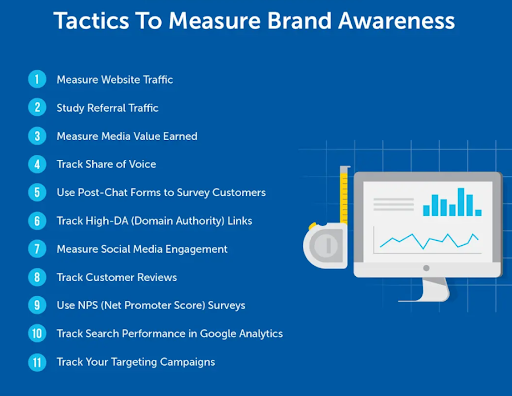
Measuring brand awareness is a systematic process. If it's done correctly, then it will help you to achieve great results. The key is selecting the right tools and methods and understanding the story behind the numbers.
Here’s a step-by-step framework you can follow:
Step 1: Establish Clear Objectives
Before measuring anything its important to define your goals.
Are you trying to increase visibility among a new audience segment? Or improve brand recall? Or support a product launch?
Knowing your objective defines what metrics matter most and prevents you from drowning in data.
Step 2: Use Analytics Tools to Track Quantitative Metrics
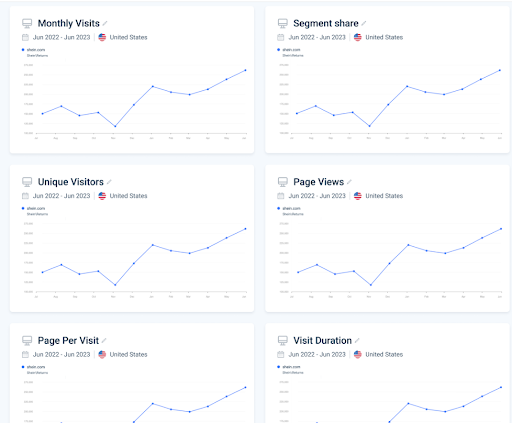
Several platforms can help you quantify brand visibility:
Google Analytics
Google Analytics helps you track website traffic, direct visits, referral sources, and how users engage with your content. By analyzing these metrics, you can plan your awareness campaign accordingly.
Google Search Console
Google Search Console helps in tracking your brand awareness with keywords. If the search volume for your brand increases, then it means your brand is getting attention in the market. You can also track the questions people are asking.
Social Listening Platforms
Tools such as Brandwatch or Sprout Social show how often your brand is mentioned on social media. They also capture sentiment. It checks whether the brand mentions are positive, neutral, or negative.
Here’s where you can get creative:
Instead of simply tracking mention counts, monitor the context of those mentions. Are people talking about your solution, sharing content, or comparing you to competitors? These answers can give you amazing insights about awareness and positioning.
Step 3: Analyze Campaign Performance
Each campaign you run, such as email marketing, paid ads, webinars, or social outreach, carries awareness potential. Don’t just measure clicks or conversions. Consider measuring performance metrics like:
- Impressions
- Reach
- Engagement rates
- Growth in branded searches after the campaign
For example, if a content campaign increases your social engagement and your branded search terms grow within a few weeks. Then, that’s a strong signal that his campaign improved awareness.
Step 4: Deploy Surveys and Brand Recall Tests
Numbers tell part of the story; perception surveys fill in the rest. You can run:
- Website exit surveys
- Email polls
- Targeted surveys for customers or prospects
- Brand recall studies where participants are asked what brands come to mind in your category
Surveys are where you might consider tools like a psychology tool for business. These are the systems designed to interpret emotional and cognitive responses to your brand. These tools help you understand how people feel about your brand. These insights are powerful because they help in refining messaging and positioning.
Step 5: Benchmark and Repeat
The most effective measurement does not come in one time. It is a repeated process that reveals trends. Set monthly, quarterly, or annual benchmarks. Watch how promotions, product launches, or market shifts influence brand visibility.
Longitudinal data, meaning data tracked over time, is what allows you to make confident decisions.
Tips to Improve Brand Awareness After Measurement
Once you’ve measured brand awareness, the real work begins: improving it.
Here are practical strategies, grounded in real marketing practices that successful brands use:
1. Refine and Strengthen Your Content Strategy
Content builds awareness about your brand. Make sure that you are creating blogs, sharing news-related content, and content that will help answer the questions asked by your audience.
Ask yourself:
- What kind of subjects are my audience searching for?
- On which platform do they spend most of their time?
- What form of content do they prefer the most? Is it videos, long-form guides, or newsletters?
Create a content calendar that aligns with audience intent and plan your content based on audience preferences.
2. Invest in Consistent Social Presence
Social networks assist in gaining reach for your content. Brands that keep posting important content, engaging, and taking part in conversations are never forgotten. People do forget things. They forget the less important things, but important things are never forgotten.
However, consistency does not mean creating more content. It means creating content with purpose. Create content based on the audience’s preferences.
3. Collaborate With Influencers and Partners
Influencer marketing can be a game-changer when done right. It can quickly help to increase brand awareness. Look for partners whose audience aligns with your target audience and whose voice adds credibility to your brand.
Pro tip: Micro-influencers often deliver stronger engagement than celebrity endorsers because their communities are more niche and trust-driven.
4. Leverage Paid Campaigns for Reach
Organic reach is valuable, but paid promotion increases visibility quickly and at a large scale. It also ensures your brand gets in front of the right people at the right time.
Experiment with:
- Branded search ads
- Display ads targeting audience clusters
- Sponsored content on industry sites
- Retargeting campaigns to reinforce exposure
Track which paid channels move your awareness metrics most efficiently.
5. Encourage Word-of-Mouth and Reviews
Customers trust word-of-mouth recommendations over direct advertising. Request your satisfied customers to give reviews, testimonials, or refer their colleagues. This will build much-needed credibility with most of them and will seed awareness in circles that are impossible to reach otherwise.
Turning Brand Awareness Into Action
Brand awareness reflects how visible, relevant, and memorable over time your brand is. Tracking the right brand awareness metrics helps you move from assumptions to making informed decisions about where to focus and what to improve.
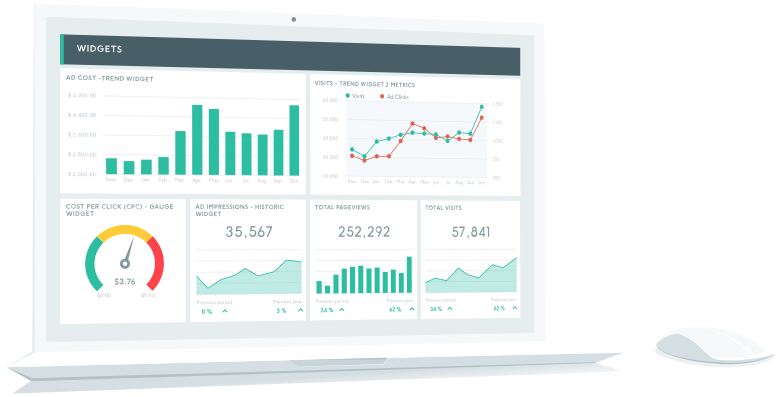
A brand awareness reporting dashboard ties these key insights together in one place: search visibility, website traffic, social mentions, and campaign impact.
Connect with DashThis to track trends more easily and to share crystal-clear performance reports.

Measure your brand awareness metrics in Dashthis now!
Read More

Don’t miss out!
Follow us on social media to stay tuned!


Automate your reports!
Bring all your marketing data into one automated report.
Try dashthis for free